

How to Choose the Right Bow Stabilizers
As a seasoned archer, I know that a well-chosen stabilizer can make the difference between good groups and pinpoint accuracy. Whether you're hunting game at long distances or competing in target tournaments, proper stabilization enhances shot consistency, reduces vibrations, and improves your overall accuracy. However, selecting the right stabilizer involves understanding your bow setup, shooting style, and the demands of your discipline.
Our Top Picks
Affiliate disclosure: if you buy through these links, we may earn a commission at no extra cost to you.

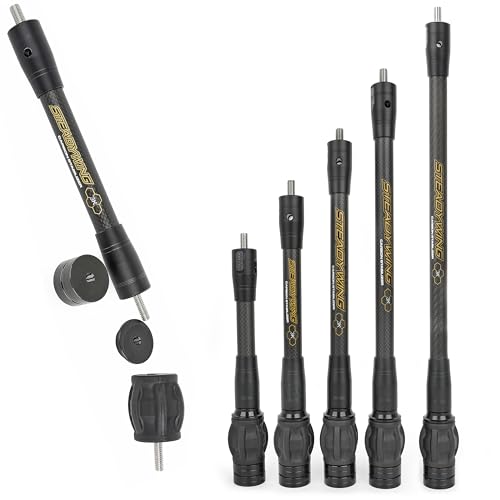

From the complexities of tuning compound bows with different cam systems to matching arrow spines for precision, the right stabilization complements your entire archery system. Let’s explore how to choose stabilizers tailored to your specific needs and equipment.
Table of Contents
- Understanding Stabilizer Types and Functions
- Factors to Consider for Hunting vs. Target Shooting
- Choosing the Right Length, Weight, and Balance
- Matching Stabilizer Systems to Your Bow and Arrow Setup
- Installation and Tuning Tips for Optimal Performance
- Common Pitfalls and How to Avoid Them
- Frequently Asked Questions
- Conclusion
Understanding Stabilizer Types and Functions
Stabilizers come in various configurations, primarily designed to reduce vibrations, improve balance, and dampen oscillations for repeatable shot execution. The most common types include front-mounted stabilizers, side bars, and back stabilizers. Front stabilizers often add length and weight at the bow's front, helping maintain aim during the shot. Side stabilizers, mounted perpendicular to the riser, assist in balancing the bow laterally, especially important for bows with longer axle-to-axle lengths or when using heavier broadheads for hunting.
Back stabilizers, typically shorter and lighter, help absorb residual vibrations post-shot, especially valuable for compound bows with aggressive cam systems where vibration damping is critical. When selecting stabilizers, consider the purpose—hunting or target shooting—and balance your overall system to optimize accuracy and stability.
Factors to Consider for Hunting vs. Target Shooting
The primary difference in stabilizer selection lies in the discipline and intended use. For hunting, stability at longer ranges and quick target acquisition are priorities. A heavier stabilizer system can help reduce bow torque from mishandling and manage the more aggressive cam systems found on hunting bows, especially at high draw weights (60-70 lbs). Durability and portability are also considerations, as hunting environments demand rugged, easy-to-carry gear.
Conversely, target shooters emphasize repeatability and minimal swing during aiming. Lighter stabilizer setups allow for quicker adjustments and less fatigue during extended shooting sessions. They often incorporate multiple bars and tuning weights to fine-tune balance without sacrificing control or accuracy. Understanding your specific bow setup—such as draw weight, let-off percentage, and cam system—is essential to balancing stability with maneuverability.
Choosing the Right Length, Weight, and Balance
Stabilizer length impacts both leverage and maneuverability. Longer stabilizers (up to 24 inches) provide greater rotational inertia, helping stabilize the bow during the shot cycle. However, excessive length can hinder handling in tight hunting environments. For target setups, longer stabilizers improve accuracy at fixed distances; for hunting, a moderate length (12-20 inches) often offers a good compromise.
Weight is equally crucial. Heavier stabilizers improve damping and reduce oscillations, making your shot more consistent. Typical hunting stabilizers range from 8-12 oz., while target stabilizers are slightly lighter, around 4-8 oz., to facilitate quick aiming. Proper balancing involves adding or removing weights until your bow feels controlled without excessive effort to hold at full draw.
Matching Stabilizer Systems to Your Bow and Arrow Setup
The type of bow cam system influences stabilization needs. Compound bows with cam systems like limb-driven or hybrid cams benefit from stabilizers that dampen vibration and torque, especially at high let-off. For bows with speed-optimized cams, a heavier stabilizer helps manage the increased shot cycle momentum.
Arrow spine matching also plays a role. A well-tuned system, where arrow flex matches your bow’s deflection profile, results in less pivoting and better consistency. In this context, stabilization minimizes minor torque variances caused by arrow flex. Consider using tuning stabilizers during setup to identify what combination yields the best residual torque and vibration damping.
Installation and Tuning Tips for Optimal Performance
Precision installation is paramount. Mount your stabilizers firmly, ensuring they are aligned correctly—front stabilizers should be straight along the bow's centerline. Adjustable stabilizers allow for incremental weight changes, facilitating fine-tuning without replacing entire components.
Once installed, conduct a series of shot groups to evaluate stability. Adjust the stabilizer length or add weight to fine-tune your balance. For tuning, consider shooting through a chronograph or using a vibration analysis app to quantify shot consistency improvements. Remember, small incremental adjustments have a significant impact on accuracy at distance.
Common Pitfalls and How to Avoid Them
One common mistake is overloading the stabilizer, which can hinder handling and speed. Balance weight with your bow’s intended purpose—more weight isn't always better. Also avoid mismatched stabilization components; for example, a very light stabilizer on a heavy hunting bow can create imbalance, leading to inconsistent shots.
Furthermore, neglecting proper installation or ignoring the influence of arrow spine on vibration can lead to suboptimal performance. Regularly revisit your stabilization setup as you change equipment or shooting conditions, ensuring your system remains tuned for peak accuracy and consistency.
Frequently Asked Questions
What is the ideal stabilizer weight for hunting bows?
Typically between 8-12 oz. for front stabilizers, with additional side bars if needed, to help manage wind and long-range stability.
Can stabilizers improve my accuracy at very long distances?
Yes, especially in reducing bow torque and oscillations, which helps improve consistency and grouping at extended ranges.
Are longer stabilizers always better?
Not necessarily. Longer stabilizers offer more inertia and damping but may reduce maneuverability in tight spaces. Choose length based on your shooting environment and discipline.
How do I tune my stabilizer for optimal performance?
Start with manufacturer recommendations, then shoot groups and adjust weight or length incrementally. Use vibration analysis or shot feel to guide fine-tuning.
Should I match my stabilizer weight to my bow’s draw weight?
Heavier bows often benefit from heavier stabilizers to control torque and vibration; lighter bows might do better with lighter setups for handling agility.
Can I add stabilizer dampers or vibration suppressors?
Absolutely. They help absorb residual vibrations and improve overall shot feel, especially in high-speed compound bows or bows with aggressive cam systems.
Conclusion
Choosing the right stabilizer involves balancing weight, length, and system compatibility to match your bow’s characteristics and shooting goals. Whether you’re hunting game at long range or striving for perfect groups in target tournaments, a properly tuned stabilizer system enhances shot confidence and overall performance. Use this guide as a foundation to experiment and fine-tune your setup, and remember that stability and balance are key to consistent success. Next step: evaluate your current setup, identify your needs, and invest in stabilizers that elevate your archery game to the next level.


